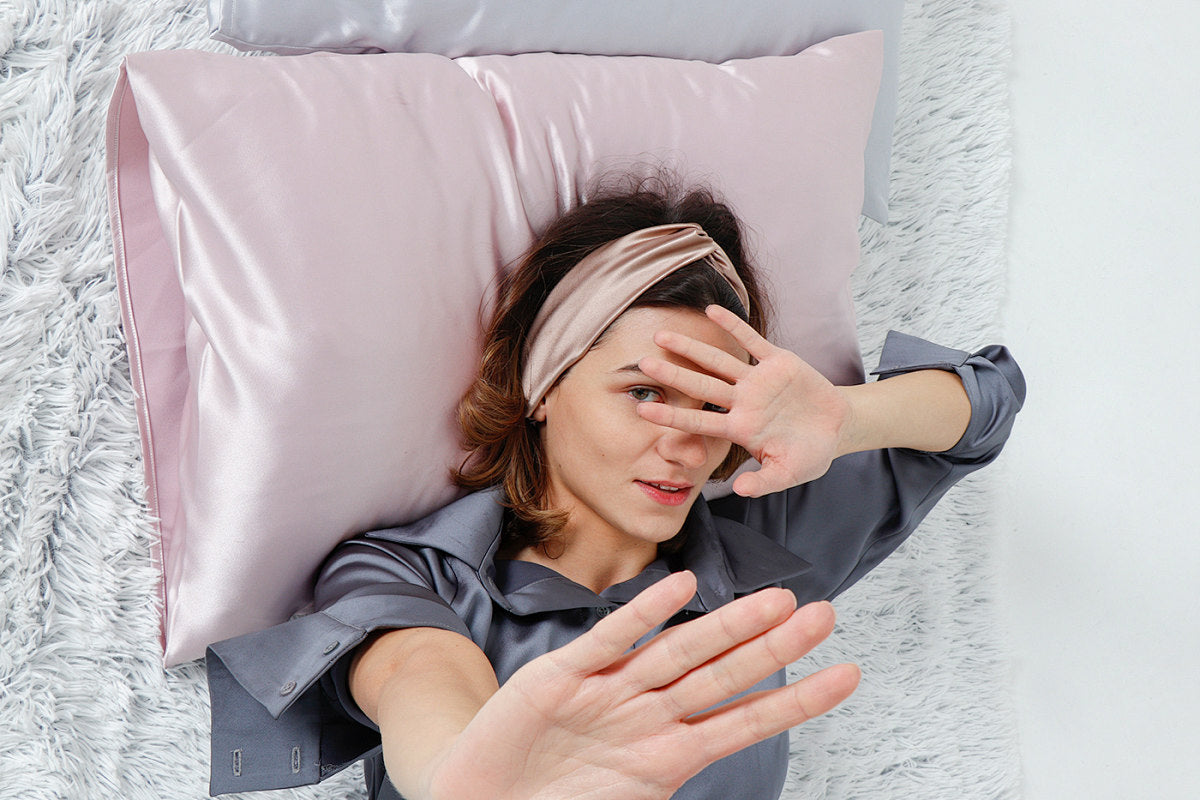


A sleep mask cannot guarantee deeper sleep or cure insomnia, but it can do one useful thing very well: reduce the amount of light reaching your eyes while you are trying to rest.
For sleepers who cannot make their room completely dark—or who nap while traveling—that simple function can make the sleep environment more comfortable.
Why Darkness Matters at Bedtime
Light is one of the environmental signals involved in the body’s sleep-wake timing.
A dark room can support normal nighttime sleep cues, while bright light can make a room feel less sleep-friendly.
A sleep mask is therefore best viewed as an environmental tool, not a medical treatment.
When a Sleep Mask Is Most Useful
- Early morning light enters the bedroom
- You work shifts and sleep during daylight
- You travel by plane or train
- Hotel curtains do not fully block light
- You take daytime naps
- A partner uses a reading light
Why Choose Silk for a Sleep Mask?
The main advantage of silk is surface feel.
Mulberry silk has a smooth texture that many people find comfortable against the face.
That does not mean silk automatically improves sleep stages or prevents wrinkles. The mask’s ability to block light, fit comfortably, and stay in place matters more for its primary function.
What to Look for in a Good Sleep Mask
1. Effective Light Blocking
Check for gaps around the nose and sides. A beautiful mask that lets in a large amount of light may not serve its main purpose.
2. Comfortable Pressure
The strap should hold the mask in place without feeling excessively tight.
3. A Secure Fit
People who change positions frequently may prefer a strap that remains stable without creating pressure points.
4. Breathable, Smooth Contact Materials
A comfortable inner surface matters because the mask sits against the face for hours.
Can a Sleep Mask Help You Fall Asleep Faster?
It may help some people by making the environment darker and reducing visual stimulation.
But sleep onset also depends on many other factors, including schedule, stress, caffeine, noise, room temperature, and individual sleep conditions.
Do not treat a sleep mask as a substitute for medical evaluation of persistent insomnia.
Can You Use a Sleep Mask Every Night?
Many people do.
Keep the mask clean and follow its care instructions, especially if you use skincare or hair products that transfer to the fabric.
How to Wash a Silk Sleep Mask
Follow the sewn-in care label.
General silk care usually involves:
- Cool water
- A suitable mild detergent
- Low friction
- No bleach
- Gentle air-drying away from strong heat
Sleep Mask vs. Blackout Curtains
They solve the same problem in different ways.
Blackout curtains darken the entire room. A sleep mask is portable and works even when you cannot control the room, which makes it useful for travel.
Some sleepers use both.
Frequently Asked Questions
Does a silk sleep mask improve deep sleep?
A mask can help create a darker sleep environment, but it should not be marketed as guaranteeing deeper sleep or changing sleep stages.
Can a sleep mask block all light?
That depends on its shape and fit. Small gaps around the nose can allow light through even with opaque fabric.
Is silk better than polyester for a sleep mask?
Silk offers a naturally smooth feel. The better mask is the one that combines comfortable contact with effective light blocking and fit.
A Small Tool for a Darker Sleep Environment
That is the most useful way to think about a sleep mask: simple, portable light control.
Explore the DownyHaven Mulberry Silk Sleep Mask
DownyHaven Blog Reader Offer
Use code BLOG10 for 10% off orders of $40 or more.
Limited to one use per customer.