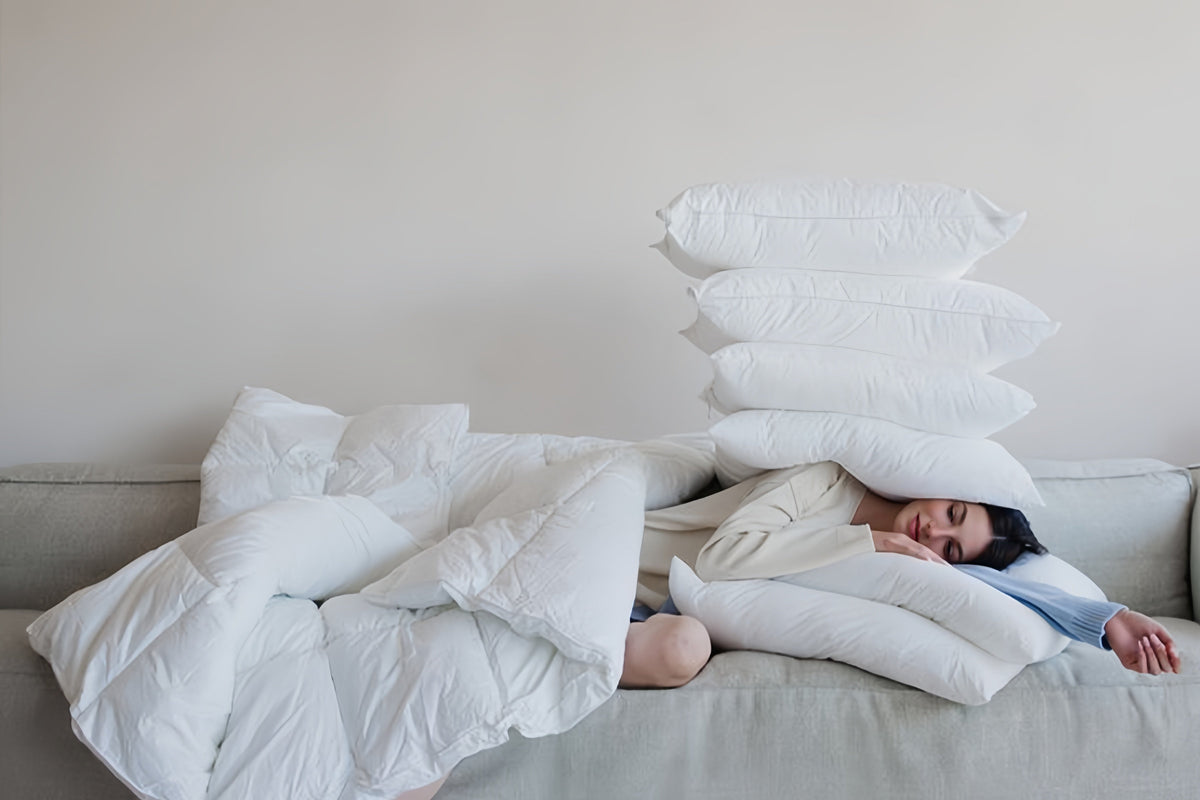


Pillow height and sleeping position can affect how your neck, head, and shoulders are positioned during the night. For some sleepers, an awkward pillow setup may contribute to morning shoulder or neck discomfort.
A pillow is not a treatment for shoulder injuries or medical conditions, but adjusting your sleep setup can sometimes improve comfort.
How Pillow Height Affects the Shoulder Area
Your pillow fills the space between your head and the mattress.
If it is too low during side sleeping, the head may tilt toward the mattress. If it is too high, the head may tilt away from it.
Either extreme can make the upper body feel less neutral.
Side Sleepers: Shoulder Width Matters
Side sleepers often need more effective pillow height because the shoulder creates distance between the head and mattress.
The right amount depends on:
- Shoulder width
- Mattress firmness
- How deeply the shoulder sinks into the mattress
- Pillow compression
- Whether the sleeper places an arm under the pillow
A softer mattress may allow the shoulder to sink farther, reducing the required pillow height. A firmer mattress can increase the gap.
Back Sleepers: Avoid Excessive Height
Back sleepers usually need less height than side sleepers.
A very tall pillow can push the head forward, while a pillow that is too flat may not provide the neck support the sleeper prefers.
Could Your Arm Position Be Part of the Problem?
Some side sleepers place an arm directly under the head or pillow. That changes the effective height and can place additional pressure on the shoulder or arm.
Try comparing how you feel with the arm:
- In front of your body
- Resting lower on the mattress
- Under the pillow
Small position changes can alter the entire setup.
What Pillow Characteristics Can Help With Comfort?
Appropriate Effective Height
Choose the height that keeps your head from being visibly forced far upward or downward in your dominant position.
Compression
A pillow that compresses can adapt to body weight, but it still needs enough usable loft for the sleeper.
Moldability
Moldable pillows can be redistributed under the neck or away from the shoulder, which some sleepers prefer.
Can Goose Down Work for Side Sleepers?
Yes, if the pillow has enough effective height and structure for the sleeper.
Not every goose down pillow has the same loft. Compare the specific profile rather than choosing by material alone.
See our Side Sleeper Pillow Guide.
When Shoulder Pain Needs Medical Attention
Persistent, severe, worsening, or injury-related shoulder pain should not be self-treated by changing a pillow alone.
Seek professional medical advice if pain is significant, follows an injury, causes weakness or numbness, limits movement, or continues despite changes to your sleep setup.
A Simple Pillow-Position Check
- Lie in your usual sleeping position.
- Notice whether the head is pushed noticeably upward or dropping toward the mattress.
- Check whether your shoulder is trapped directly under your body or pillow.
- Try a small change in pillow height or arm position.
- Evaluate comfort over several nights rather than one minute in a showroom.
Frequently Asked Questions
Can a pillow cause shoulder pain?
A pillow can influence sleep posture and comfort, but shoulder pain can have many causes. Persistent pain deserves professional evaluation.
Should side sleepers use a high pillow?
They often need more effective height than back or stomach sleepers, but the correct height depends on shoulder width and mattress firmness.
Is a soft pillow better for shoulder pain?
Softness alone is not the goal. Effective height, compression, and your preferred support matter more.
Use Pillow Position to Improve Comfort—Not to Diagnose Pain
Start with a neutral, comfortable sleep position and adjust height gradually.
For product selection, use our Goose Down Pillow Buying Guide.