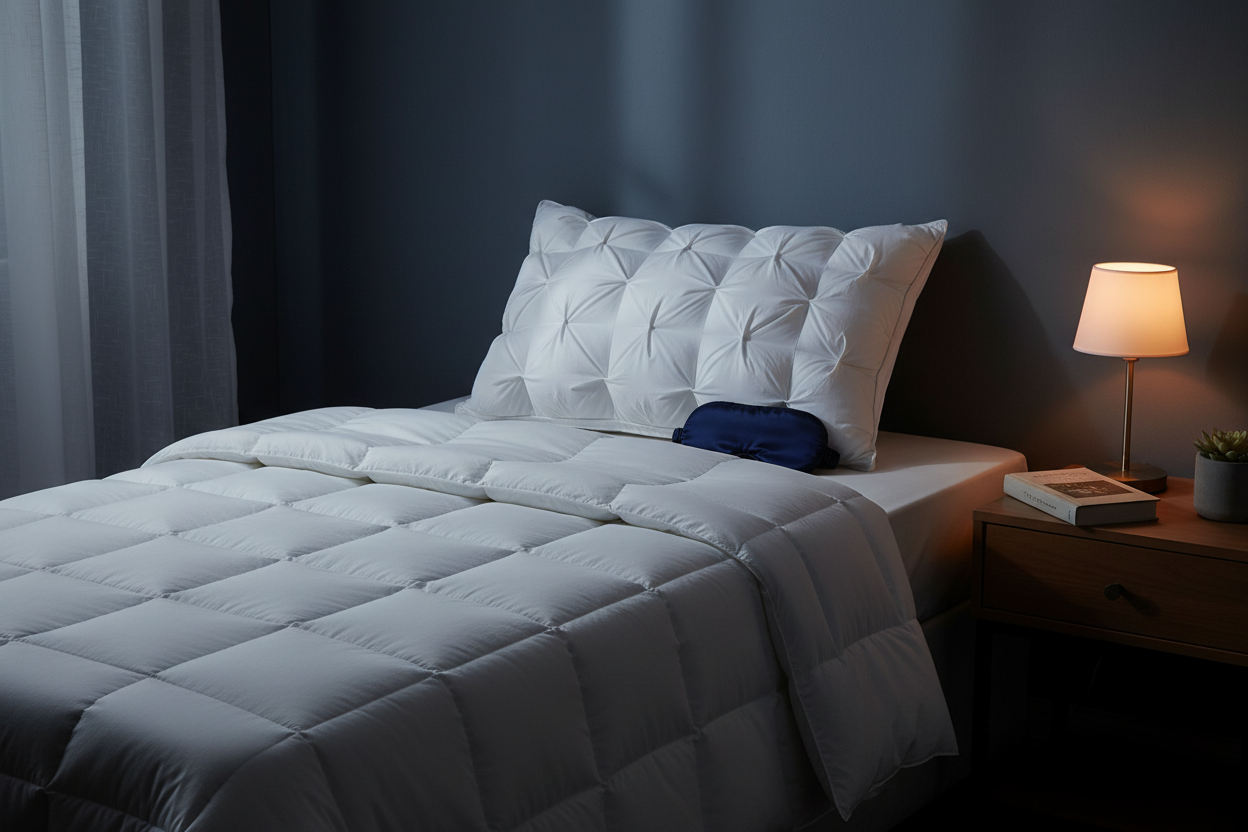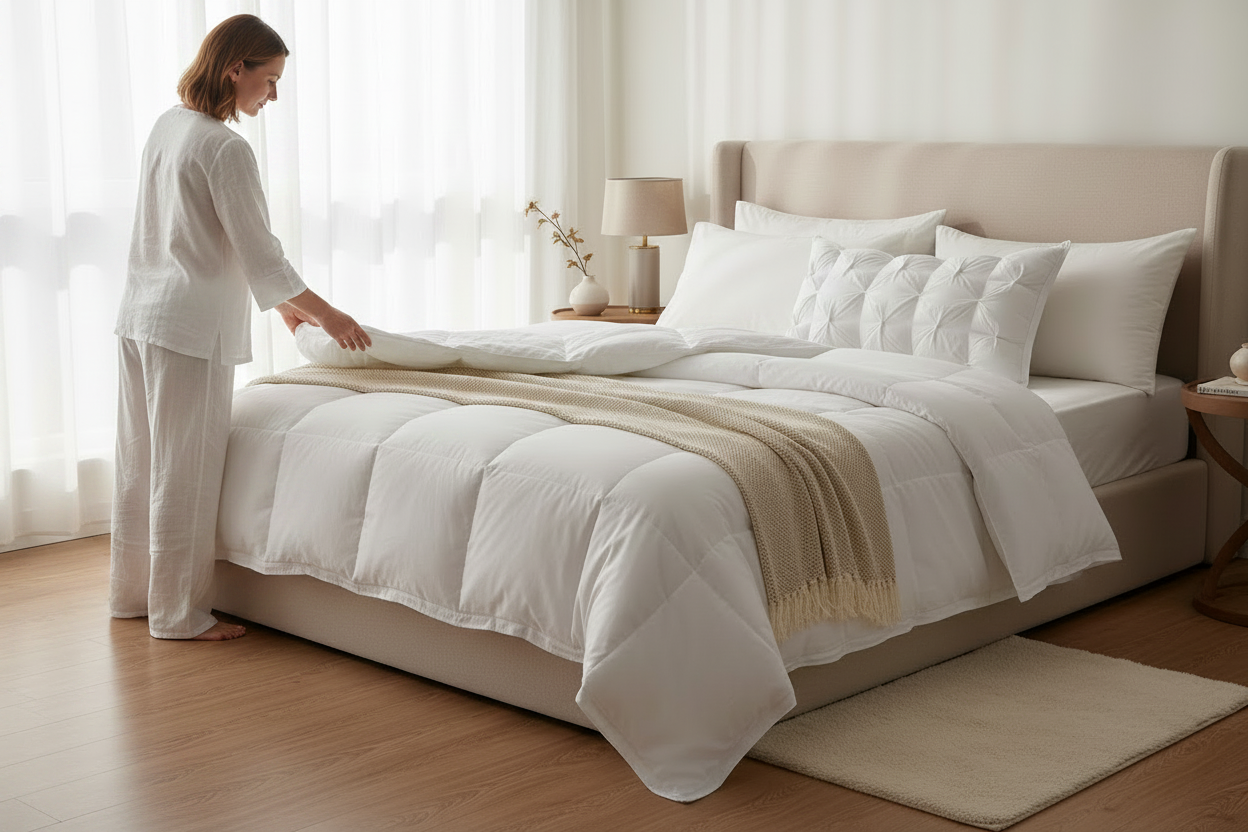

We didn’t expect much.
After all, bedding is just bedding… right?
But 30 nights later, the data told a very different story.
And one result completely changed how we think about sleep.
This Was Not a Comfort Test—It Was a Sleep Experiment
We tracked sleep using professional-grade biometric devices:
- Oura Ring (deep sleep + recovery score)
- WHOOP (HRV + stress recovery)
- Nighttime temperature monitoring
We tested five bedding materials under the same conditions:
- Goose down
- Duck down
- Silk fill
- Bamboo fiber
- Synthetic fiber
What we discovered wasn’t subjective.
It was measurable.
The Most Unexpected Finding: Comfort Had Nothing to Do With Performance
At the beginning, we assumed:
“The softest one would perform the best.”
We were wrong.
Softness did not predict sleep quality.
Stability did.
Goose Down Quietly Outperformed Everything in One Critical Way
Goose down didn’t “feel” dramatically different.
But the data showed something interesting:
It created the most stable sleep environment throughout the night.
- Fewer micro-awakenings
- More consistent deep sleep cycles
- Better temperature regulation
And that stability changed everything.
Duck Down Was Close—but Not Quite the Same
Duck down performed well overall.
But the data showed:
- Slightly more variability in temperature
- Less consistent deep sleep patterns
Small differences… but meaningful over time.
The Real Problem With Synthetic Fillings
Synthetic fiber looked comfortable at first.
But over time, the data revealed:
- Higher nighttime heat retention
- More frequent sleep interruptions
- Lower recovery consistency
What felt fine… didn’t perform well.
Silk and Bamboo: The “Comfort Illusion”
Silk and bamboo both had one thing in common:
They felt good initially.
But struggled with:
- Temperature stability
- Overnight consistency
- Deep sleep maintenance
Comfort is not the same as recovery.
The Pattern We Couldn’t Ignore
Across all 30 nights, one factor kept showing up again and again:
Temperature stability directly influenced sleep quality.
Even small fluctuations led to:
- Micro-awakenings
- Reduced deep sleep
- Lower HRV scores
Sleep is fragile in ways most people never notice.
So What Actually Matters When Choosing Bedding?
After 30 nights of tracking, the conclusion was simple:
It’s not about softness.
It’s about consistency.
- Stable temperature
- Stable sleep cycles
- Stable recovery signals
That’s what separates average sleep from truly restorative sleep.
Why This Matters More Than You Think
Most people spend years optimizing:
- Mattresses
- Pillows
- Room temperature
But ignore the one thing touching their body for 7–8 hours every night.
Your bedding is not decoration.
It’s a biological environment.
Final Takeaway: Sleep Quality Is Not Emotional—It’s Measurable
We went into this experiment expecting opinions.
We came out with patterns.
And one clear conclusion:
The best sleep doesn’t feel the softest—it performs the most consistently.
Explore Sleep-Optimized Bedding
Because what you sleep on every night quietly shapes how you recover every day.
Reader Exclusive
Better sleep doesn’t start with effort.
It starts with better environments.