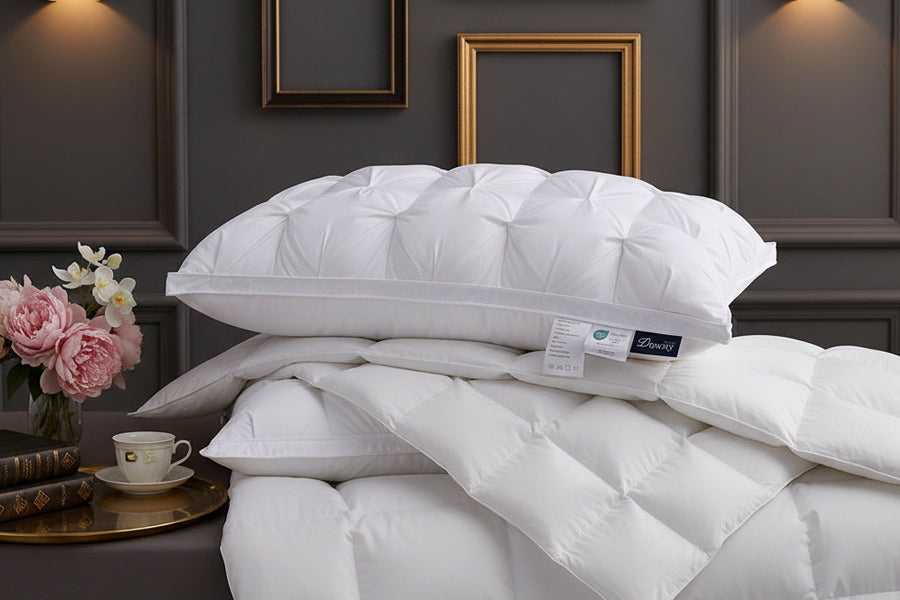

If your mornings start with neck stiffness, shoulder tightness, or the sense that you slept but didn’t actually rest, your bedding might be silently sabotaging your sleep. Bedding doesn’t wear out overnight—it declines slowly, flattening little by little until you forget what real comfort feels like.
Refreshing your pillow or comforter isn’t just about luxury. It’s a practical, science-backed investment in your body, sleep quality, and long-term wellness.
The Life Cycle of Down Pillows & Comforters
Even the highest-quality down bedding has a natural lifespan. Over time, down clusters break down, lose resilience, and stop providing the cloud-like loft they’re designed for.
Typical lifespan:
-
Down pillows: 2–3 years
-
Down comforters: 5–10 years
Why the decline?
-
Moisture from nightly use compresses the filling
-
Natural oils from skin and hair soften the down
-
Repeated weight breaks down clusters
When your bedding loses its loft, it loses its ability to support and regulate temperature—two essentials for quality sleep.
👉 Want products that last longer? Explore our premium down pillows and comforters for guaranteed loft and support.
How Old Bedding Impacts Your Neck, Shoulders & Sleep
Your pillow plays a major role in supporting your spine. A flattened pillow throws off your alignment, forcing your neck and shoulders to compensate all night long.
This can lead to:
-
Morning stiffness
-
Waking up multiple times
-
Shoulder tension
-
Headaches
-
Restless, light sleep
Your comforter matters, too. When insulation is uneven or clumped, your body temperature fluctuates, interrupting deep sleep cycles.
Upgrading isn’t about indulgence—it’s about physical well-being.
How to Know If Your Bedding Has “Expired”
You should replace your pillow or comforter if you notice:
-
Flatness: It stays flat even after fluffing
-
Lumps & empty spots: Uneven filling distribution
-
Musty or persistent odor: Signs of moisture and buildup
-
Increased allergies: Dust mites, dander, trapped particles
-
Neck or shoulder discomfort: A sign of lost support
-
No bounce: Down no longer springs back after being pressed
If two or more apply, it’s time for a new bedding set.
Smart Guide: How to Choose Your Replacement Down Bedding
When refreshing your bedding, consider:
✔ Pillow Selection
-
Soft: Best for stomach sleepers
-
Medium: Best for back sleepers
-
Firm: Best for side sleepers needing extra support
Choose a fill level that supports your neck without lifting your head too high.
✔ Comforter Selection
Look for:
-
All-season weight for year-round use
-
Premium 90%+ goose down for better loft retention
-
Baffle-box construction to prevent shifting
-
Breathable cotton shell for moisture control
✔ Care Tips to Extend Lifespan
-
Use pillow protectors
-
Air out comforters regularly
-
Fluff weekly
Product Recommendations
★ Classic Goose Down Pillow
Perfect for anyone needing balanced support—plush yet structured, breathable, and long-lasting.
★ All-Season Goose Down Comforter
Lightweight, lofty, and cozy through every season. No overheating, no cold spots—just effortless comfort.
👉 Explore our best-sellers here:
Classic Down Pillow
All-Season Down Comforter
FQS: Frequently Questioned Sleep (Our Fun FAQ Section)
Q: How often should I replace my pillow?
Every 2–3 years for optimal support and hygiene.
Q: What if my pillow still looks fine?
If you wake up with discomfort, your pillow is no longer doing its job—even if it looks okay.
Q: How do I test if my pillow is “dead”?
Fold it in half.
If it doesn't spring back immediately → time to replace it.
Q: Why does my comforter feel heavier than before?
It’s likely absorbing moisture over time, causing the down to clump and lose insulation.
Q: Can new bedding really make that much difference?
Absolutely. A supportive pillow and a temperature-regulating comforter can improve your sleep quality from the very first night.
Invest in Your Sleep—Invest in Yourself
You spend one-third of your life sleeping. Your bedding shouldn’t be an afterthought. Upgrading your pillow and comforter gives your body the rest, repair, and energy it needs every single day.
✨ Special Reader Offer:
Use code BLOG10 for 10% off your order today.
Shop here → DownyHaven.com