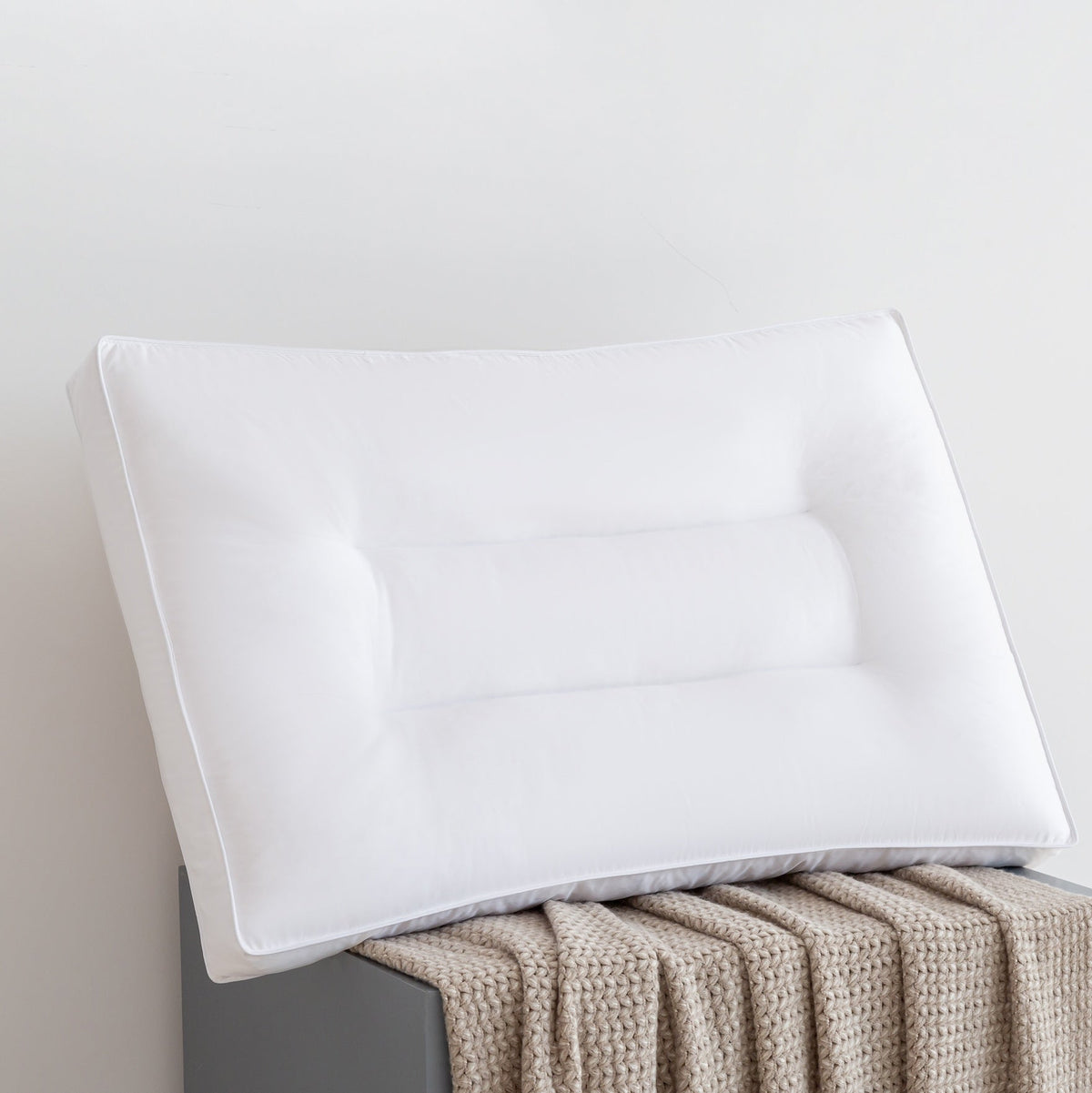
A goose down pillow does not have one fixed expiration date.
A well-made pillow may remain comfortable for several years, but its actual lifespan depends on its filling, construction, frequency of use, exposure to moisture, and how it is maintained.
Rather than replacing a pillow only because it has reached a certain age, evaluate whether it can still recover its shape, distribute its filling evenly, remain dry, and provide the height and feel you prefer.
How Long Can a Goose Down Pillow Last?
There is no universal replacement schedule for a goose down pillow.
A pillow used every night will experience more compression, moisture, and movement than one kept in a guest room. A soft, lightly filled pillow may also appear flatter sooner than a fuller pillow, even when the filling is still usable.
The condition of the pillow is usually more important than its age.
A goose down pillow may still be suitable for use when:
- The filling can be redistributed through gentle fluffing
- The pillow recovers enough height for your preference
- The shell and seams remain intact
- The filling is completely dry
- There is no persistent musty or moisture-related odor
- The pillow still provides an even sleeping surface
Age should be treated as a reminder to inspect the pillow—not as an automatic replacement deadline.
Why Do Goose Down Pillow Lifespan Estimates Vary So Much?
Online lifespan recommendations often measure different things.
Some recommendations focus on a routine replacement schedule for frequently used household pillows. Others focus on how long the natural filling and outer shell may remain physically usable when properly maintained.
A guest-room pillow used several nights a year will not experience the same compression and moisture exposure as a primary pillow used every night. A lightly filled soft pillow may also appear flatter sooner than a fuller pillow, even when the down itself is still usable.
Product construction matters as well. A pillow made primarily with soft down clusters will behave differently from a three-chamber pillow that combines down with a more structured feather center.
For these reasons, age should be treated as a reminder to inspect your pillow—not as an automatic replacement deadline.
What Affects the Lifespan of a Goose Down Pillow?
Filling and Construction
Goose down is soft, compressible, and moldable. It moves under pressure and can be redistributed through fluffing.
The finished pillow is also affected by:
- Down percentage
- Feather content
- Total fill weight
- Fill power
- Internal chambers
- Pillow dimensions
- Intended height and feel
A mostly-down pillow may feel softer and more moldable, while a three-chamber pillow with a feather center may provide more internal structure.
Neither design automatically lasts longer in every situation. They are made to provide different comfort experiences.
Frequency of Use
A pillow used every night experiences repeated compression and reshaping.
Sleeping habits also matter. Some sleepers remain relatively still, while others fold, bunch, or place more pressure on one area of the pillow.
A guest-room pillow or decorative pillow will usually experience less wear than a primary sleeping pillow.
Moisture Exposure
Moisture is one of the most important factors in down-pillow care.
Possible sources include:
- Perspiration
- Wet hair
- Humid rooms
- Spills
- Incomplete drying after cleaning
- Damp storage areas
Moisture may cause down clusters to cling together, creating clumps, uneven areas, or odor.
The outer shell can feel dry while the filling in the center remains damp. Never use or store a down pillow until it is completely dry.
Shell and Seam Condition
Even when the filling remains usable, damage to the outer shell can shorten the practical life of a pillow.
Inspect the pillow for:
- Open seams
- Loose stitching
- Worn or thinning fabric
- Damaged piping
- Tears or holes
- Repeated filling loss
Small amounts of fine filling may occasionally work through woven fabric, particularly in feather-containing products. Repeated or substantial filling loss may indicate damage that needs attention.
Changes in Your Comfort Preferences
A pillow does not always need replacement because the materials have failed.
Your preferred pillow height or feel may change because of:
- A new mattress
- A different sleep position
- Changes in shoulder width or body weight
- A preference for a softer or firmer pillow
- A change from one pillow to a layered arrangement
A pillow can remain physically usable while no longer being the right comfort fit for you.
Why Do Goose Down Pillows Become Flat?
Some compression is normal.
Natural down is designed to be soft and moldable. It will not behave like a solid foam block that immediately returns to one fixed shape.
A goose down pillow may temporarily look flatter because:
- The filling has moved toward the sides
- It has been compressed overnight
- It was recently removed from compressed packaging
- Moisture has caused clusters to stick together
- It has not been fluffed recently
- It was intentionally designed with a low profile
A flat appearance does not automatically mean the pillow has reached the end of its usable life.
The more important question is whether the filling can still be redistributed into an even and comfortable shape.
How to Restore the Loft of a Goose Down Pillow
1. Remove the Pillowcase and Protector
Inspect the shell, seams, corners, piping, and any zipper.
Do not vigorously fluff a pillow with damaged fabric or open stitching.
2. Redistribute the Filling
Hold the pillow by opposite sides and gently push the filling toward the center.
Repeat from the top and bottom, then lightly shake and reshape the pillow.
Avoid twisting or pulling the shell aggressively.
3. Break Apart Small Clumps
Use your fingertips to gently separate clumped filling through the fabric.
Work gradually across the pillow instead of repeatedly compressing one area.
4. Air the Pillow
Place the pillow in a dry, shaded, well-ventilated area.
Make sure air can circulate around it. Avoid damp rooms and prolonged exposure to direct sunlight.
5. Follow the Sewn-In Care Label
When the care label permits tumble drying, a low-heat, air-fluff, or no-heat cycle may help redistribute the filling.
Clean dryer balls may help separate down clusters. Stop periodically to check and reshape the pillow.
Do not wash or dry a pillow based only on general online advice. The care label attached to the specific product takes priority.
For complete cleaning and drying instructions, read the Bedding Care & Washing Guide.
Signs It May Be Time to Replace Your Pillow
It No Longer Recovers After Fluffing
The pillow remains permanently flat after careful reshaping, airing, and any care permitted by its label.
The Filling Remains Heavily Clumped
Small clumps can often be separated. Large sections that remain hard, uneven, or compressed may prevent the pillow from providing a consistent surface.
It Has a Persistent Moisture-Related Odor
An odor after washing may indicate that the filling is not completely dry.
Continue label-approved drying until the center and corners are fully dry. When a musty or moisture-related odor remains after proper drying or professional cleaning, replacement may be appropriate.
The Shell or Seams Are Damaged
Open seams, thinning fabric, large tears, or repeated filling loss may make continued use impractical.
It No Longer Provides the Height You Need
A pillow may still contain usable filling but no longer provide your preferred profile.
It Feels Uneven During Use
When the filling repeatedly moves away from the center and cannot be redistributed into a comfortable shape, the pillow may no longer meet your needs.
Is the Pillow Fold Test Reliable?
Some guides recommend folding a pillow in half and replacing it when it does not immediately open.
This should not be treated as a universal rule.
A soft or lightly filled down pillow may remain folded longer than a fuller pillow even when it is still usable. Internal construction, moisture, feather content, size, and fill weight can also affect the result.
A better evaluation combines several factors:
- Recovery after fluffing
- Even filling distribution
- Shell and seam condition
- Absence of persistent dampness
- Continued comfort
- Suitable height for your preference
Does Higher Fill Power Mean a Pillow Lasts Longer?
Not necessarily.
Fill power describes how much space a given weight of down occupies when fully lofted. It does not independently determine the lifespan of the complete pillow.
Durability also depends on:
- Total fill weight
- Down and feather composition
- Internal construction
- Fabric and stitching
- Moisture exposure
- Frequency of use
- Care practices
A 750+ Fill Power low-profile pillow and an 850+ Fill Power fuller pillow are designed for different comfort preferences. The higher number does not automatically make one the better or longer-lasting choice for every sleeper.
For a complete explanation of fill power, height, feel, and construction, read the Goose Down Pillow Buying Guide.
How to Help a Goose Down Pillow Last Longer
Use a Breathable Pillow Protector
A protector helps reduce direct exposure to body oils, perspiration, cosmetics, and stains.
Fluff It Regularly
Gentle fluffing helps redistribute the filling and reduce persistent compression in one area.
Keep It Dry
Avoid sleeping on the pillow with wet hair or placing it into storage before it is completely dry.
Spot Clean Small Marks
A small stain does not always require washing the entire pillow.
Follow the care label and use the instructions in the Bedding Care & Washing Guide.
Avoid Long-Term Vacuum Storage
Extended airtight compression may make it harder for natural filling to recover.
Store a clean and completely dry pillow loosely in a breathable storage bag.
Choose the Right Height
Repeatedly folding or tightly bunching a pillow every night may indicate that it is too tall for your preference.
Selecting a more suitable profile may be more practical than continually compressing the wrong pillow height.
Frequently Asked Questions
How often should I replace a goose down pillow?
There is no universal replacement schedule.
Replace or reconsider the pillow when it no longer recovers after appropriate fluffing, remains heavily clumped, develops persistent moisture-related odor, has significant shell damage, or no longer provides the height and feel you need.
Can a flat goose down pillow be restored?
Sometimes.
Gentle fluffing, redistributing the filling, airing the pillow, and label-approved low-temperature drying may help restore its loft.
A pillow that remains permanently flat or uneven after appropriate care may need replacement.
Does washing restore a goose down pillow?
Correct cleaning may help remove residue and redistribute filling, but washing is not appropriate for every pillow.
Follow the sewn-in care label. Excessive detergent or incomplete drying may make clumping and odor worse.
Why does my down pillow smell?
A mild natural scent may occasionally be noticeable after compressed shipping and often improves after airing in a dry, ventilated room.
An odor after cleaning may indicate internal moisture. Continue label-approved drying until the center and corners are completely dry.
Can I store a goose down pillow in a vacuum bag?
Avoid long-term vacuum storage.
For extended storage, make sure the pillow is clean and fully dry, then place it loosely in a breathable bag in a dry location.
Final Thoughts
A goose down pillow should not be replaced simply because it has reached a particular age.
Its recovery, filling distribution, dryness, shell condition, and continued comfort provide more useful information than a fixed calendar estimate.
Proper protection, regular light fluffing, moisture control, and care based on the sewn-in label can help preserve its usable life.
When your pillow no longer recovers or no longer suits your preferred height and feel, compare replacement options by profile and construction—not fill power alone.