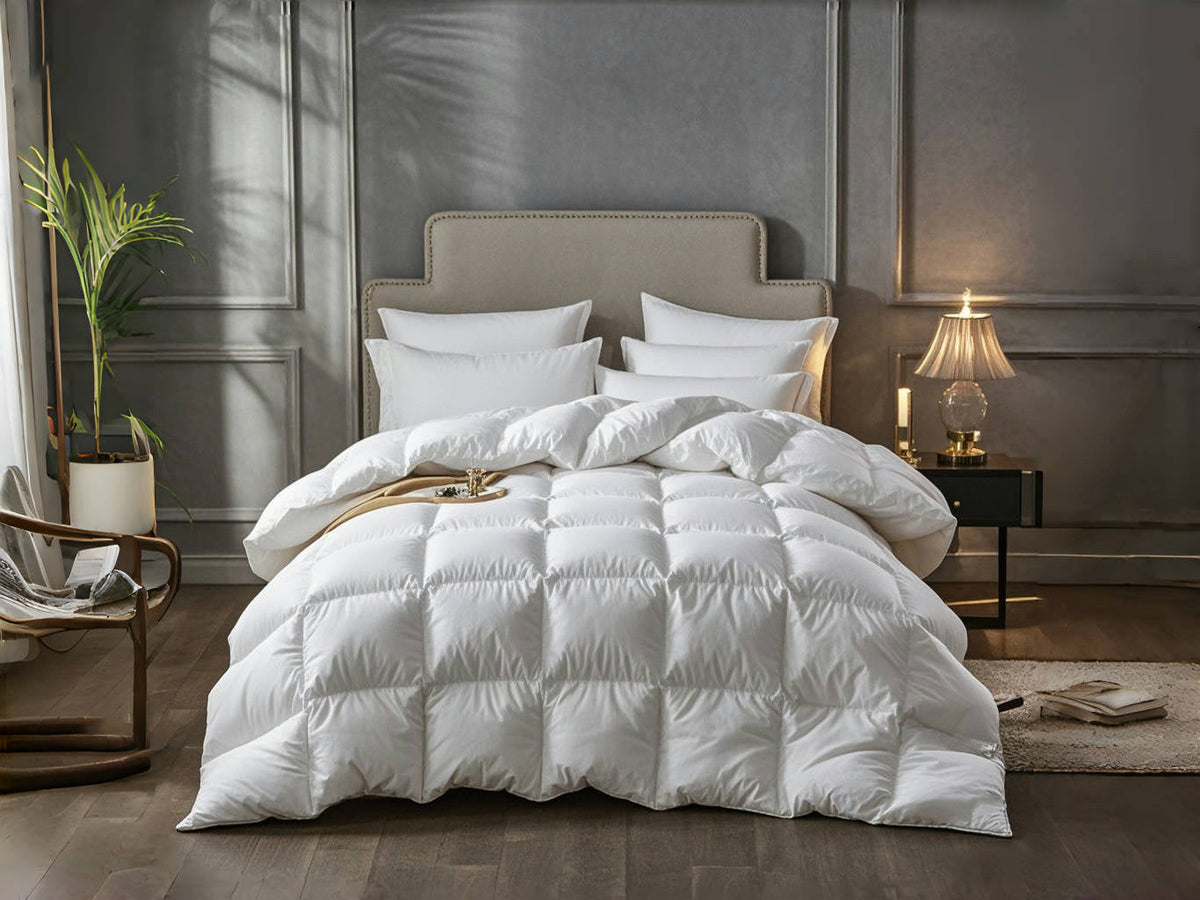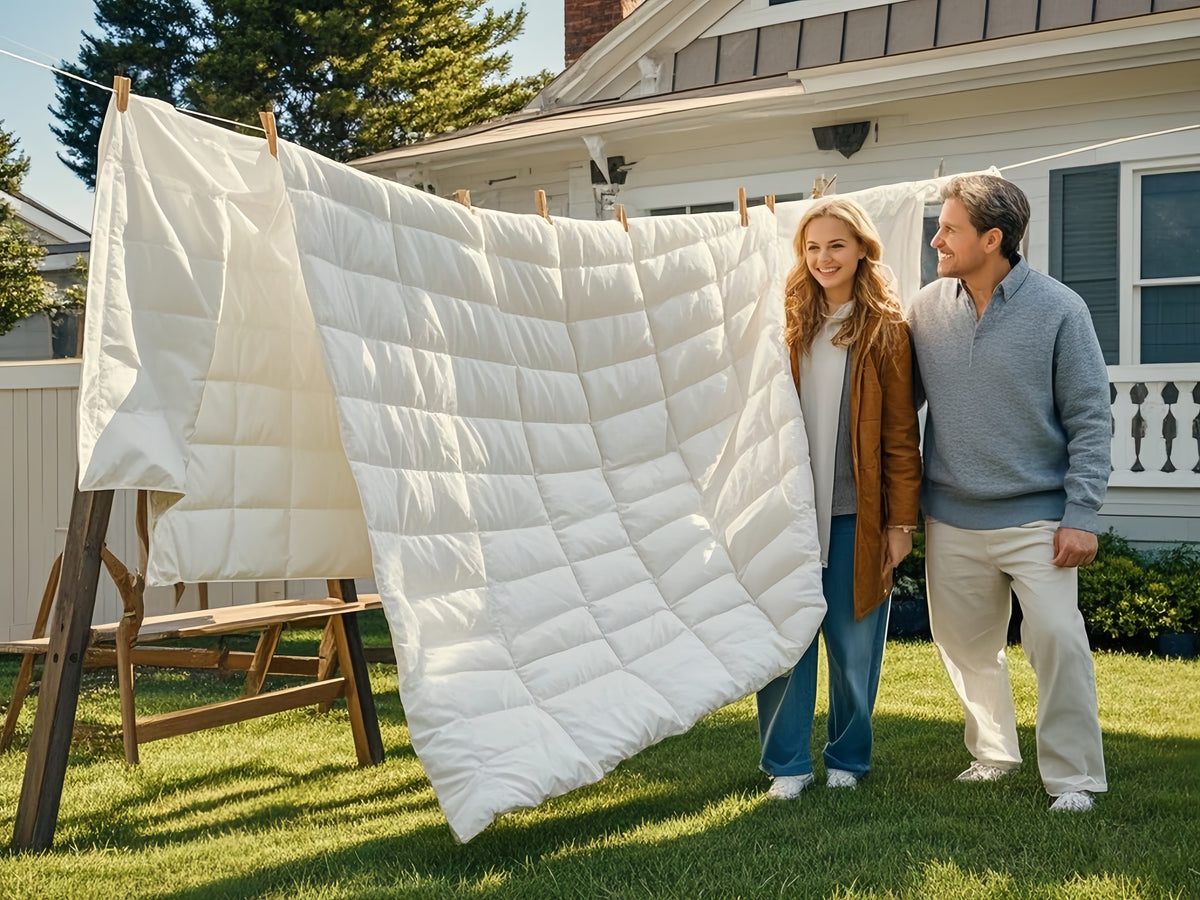


Goose down is often described as “natural,” “sustainable,” or “ethical,” but none of those words should be treated as automatic guarantees.
The environmental and animal-welfare profile of down depends on where it comes from, how it is collected, how the supply chain is controlled, how it is processed, and how long the finished bedding remains in use.
Is Goose Down a Natural Material?
Yes. Down is the soft insulating layer found beneath the outer feathers of waterfowl.
Unlike petroleum-based synthetic fiber, it is an animal-derived natural material.
That fact alone does not determine whether a particular supply chain is responsible or environmentally preferable.
Is Goose Down a Byproduct?
In many commercial supply chains, down and feathers are recovered from birds raised primarily for food production.
Using a secondary material can reduce waste compared with discarding it, but sourcing practices vary.
Consumers should look for current supplier and certification information instead of assuming every down product follows the same system.
What Does Responsible Down Standard (RDS) Mean?
RDS is a third-party standard focused on animal welfare and chain of custody in certified down supply chains.
It is intended to address practices such as live-plucking and force-feeding within its certification requirements and to track certified material through the supply chain.
RDS does not automatically prove:
- That a pillow is hypoallergenic
- That it will last a specific number of years
- That one product is more comfortable than another
- That every environmental impact has been eliminated
See our Down Certification Guide.
Why Product Lifespan Matters
Durability is one part of environmental impact.
A product that remains useful for a long time may require fewer replacements than a product that wears out quickly.
But longevity depends on construction, use, and care—not simply on the fact that the filling is down.
Down vs. Synthetic Fill: Is One Always More Sustainable?
No universal answer applies to every product.
Relevant factors include:
- Raw material source
- Manufacturing energy
- Chemical processing
- Transport distance
- Product lifespan
- Care requirements
- End-of-life options
Synthetic fibers often rely on petroleum-derived feedstocks, while down is animal-derived and requires responsible sourcing and processing.
A credible comparison should consider the full product rather than one marketing label.
What Should Shoppers Look For?
1. Clear Material Disclosure
Look for the actual percentage of down, feathers, and other filling materials.
2. Traceable Sourcing Information
Check current certification or supplier information when responsible sourcing is important to you.
3. Realistic Product Claims
Be cautious with blanket claims such as “100% eco-friendly,” “zero impact,” or “ethical by nature.”
4. Durable Construction
Shell quality, seams, chambers, and care requirements all influence how long the finished bedding remains useful.
5. Appropriate Care
Keeping bedding dry, clean, and properly stored can reduce premature replacement.
Is Hungarian Goose Down More Ethical?
Not automatically.
Geographic origin describes where material comes from. Responsible sourcing depends on the actual supply chain and standards applied to it.
Read Why Hungarian Goose Down Costs More.
Can Down Be Recycled or Reused?
Some textile and down-recovery programs can clean and reuse down from end-of-life products, but availability varies by region and recycler.
Do not place filled bedding into a general recycling bin unless your local program specifically accepts it.
Frequently Asked Questions
Is goose down sustainable?
It can be part of a responsible, durable bedding product, but sustainability depends on sourcing, processing, lifespan, and end-of-life—not the material name alone.
Is all goose down ethically sourced?
No. Look for current sourcing information and relevant third-party standards.
Does RDS mean the down is organic?
No. RDS is a responsible-sourcing and animal-welfare standard, not an organic-fiber certification.
Better Claims Start With Better Transparency
Down can offer natural loft, durability, and the opportunity to use a secondary animal material, but responsible purchasing requires more than a green label.
Compare the actual product, sourcing documentation, construction, and care requirements before deciding.