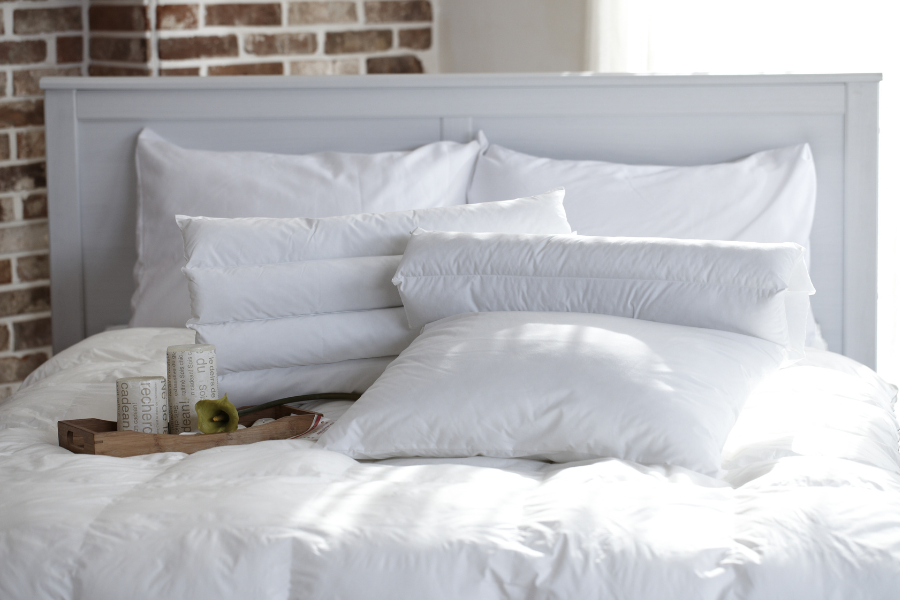


Down pillows are often described in extremes: either as the ultimate luxury pillow or as an expensive, hot, allergy-prone option that quickly goes flat.
The reality is more nuanced.
A down pillow can be a good choice for sleepers who like a soft, moldable, lightweight pillow that can be shaped and fluffed. It may be a poor fit for someone who prefers a rigid shape, very low maintenance, animal-free materials, or a pillow that feels like solid foam.
This guide separates the most common down-pillow myths from what actually matters when choosing one.

Quick Answer: Are Down Pillows Good?
They can be—but not for everyone.
Down pillows are especially appealing when you prefer:
- Soft, compressible comfort
- A pillow you can shape and fluff
- Lightweight loft
- Natural filling
- A hotel-inspired feel
- Different low, medium, or fuller profiles
They may be less suitable when you want:
- A permanently fixed shape
- Very firm resistance
- Minimal fluffing
- Animal-free materials
- The lowest possible price
- A guaranteed medical or sleep outcome
The material alone does not determine whether the pillow is right for you. Height, fill amount, down percentage, feather content, construction, mattress firmness, and personal preference all matter.
What Is a Down Pillow?
Down is the soft, three-dimensional cluster found beneath the exterior feathers of ducks and geese.
Unlike a full feather, a down cluster does not have the same long, rigid central quill. This gives down its lightweight, compressible, and moldable feel.
A pillow may contain mostly down, a mixture of down and feathers, or separate chambers with different fillings.
That distinction matters because down and feathers do different jobs. Down generally emphasizes softness and moldability, while feathers can intentionally add structure and resistance.
For the full comparison, read our Down vs. Feather Pillow Guide.
Myth 1: Down Pillows Always Go Flat Quickly
Reality: Natural compression is normal, but permanent flattening is not the same thing.
Down clusters move and compress while you sleep. A pillow may therefore look flatter in the morning than it did when freshly fluffed.
Regular light fluffing helps redistribute the filling and restore an even shape.
A pillow may need more attention when it:
- Remains heavily compressed after fluffing
- Develops persistent internal clumps
- No longer returns to the height you prefer
- Has been repeatedly exposed to moisture
If your pillow has already lost loft, use our Guide to Reviving a Flat Goose Down Pillow.
For replacement signs, see How Long Do Goose Down Pillows Last?.
Myth 2: All Down Pillows Are Hypoallergenic
Reality: Natural down is not universally hypoallergenic.
Commercial down and feathers can be washed, processed, and tested for cleanliness, but that does not mean every sleeper will tolerate every natural-fill pillow.
People may react to:
- Bird-derived materials
- Dust
- Dust mites
- Moisture or mold
- Residue
- Other bedroom allergens unrelated to the pillow filling
Independent laboratories can use tests such as oxygen number and turbidity to evaluate the cleanliness of down and feather material.
However, cleanliness testing should not be confused with responsible-sourcing certification.
For example, RDS focuses on animal welfare and chain of custody rather than serving as proof that a pillow is automatically suitable for everyone with allergies.
Learn more in our Goose Down Certifications Guide.
Myth 3: Down Pillows Are Always Too Hot
Reality: Down is an insulating material, but whether a pillow feels hot depends on the complete sleep environment.
Temperature can be affected by:
- Fill amount
- Pillow construction
- Shell fabric
- Pillow protector
- Pillowcase material
- Room temperature
- Humidity
- The individual sleeper
Down's three-dimensional clusters trap air, which is one reason the material is used in insulating bedding. At the same time, a loose natural fill does not behave exactly like a solid block of foam.
Current pillow guides commonly describe down as soft, moldable, and relatively breathable, but no down pillow should be presented as universally “cooling.”
If temperature is one of your biggest sleep concerns, also see our Best Bedding for Hot Sleepers Guide.
Myth 4: Higher Fill Power Means a Firmer or Better Pillow
Reality: Fill power is not a firmness score.
Fill power describes how much space a given weight of down occupies when lofted.
It does not independently determine:
- Finished pillow height
- Firmness
- Total fill amount
- Sleep-position suitability
- Personal comfort
A 750+ Fill Power pillow can intentionally be lower or firmer than an 850+ Fill Power pillow because the two products may use different fill weights, down percentages, feather content, sizes, or internal constructions.
Read our Down Pillow Fill Power Guide and Fill Weight Guide before comparing pillows by one number alone.
Myth 5: Feathers Mean a Pillow Is Low Quality
Reality: Feather content can be intentional.
Down is softer and more moldable. Feathers have quills and generally provide more internal resistance and structure.
That means a pillow containing feathers is not automatically a cheaper or inferior version of a down pillow.
In a multi-chamber design, feathers may be placed in the center specifically to create more structure while softer down remains in the outer chambers.
This is the approach used in pillows such as LuxTwist, where different fillings perform different roles.
Choose mostly down when softness and moldability are your priority. Consider a down-and-feather construction when you want natural-fill comfort with more internal structure.
Myth 6: Down Pillows Are Too Expensive to Be Worth It
Reality: Price and value are not the same thing.
Natural down pillows generally cost more than basic polyester or down-alternative pillows because the raw material, processing, fill specifications, shell, construction, sourcing, and manufacturing can all increase cost.
But a more expensive pillow is only good value when its height, feel, and construction actually suit you.
A premium high-profile pillow can still be poor value for someone who prefers low loft.
Use our Pillow Price Guide to compare price ranges, then read Are Goose Down Pillows Worth It? for the broader pros-and-cons decision.
Myth 7: Down Pillows Last a Guaranteed Number of Years
Reality: There is no reliable universal lifespan such as “5–10 years” for every down pillow.
Usable life depends on:
- Material quality
- Fill amount
- Construction
- How often the pillow is used
- Moisture exposure
- Cleaning and drying
- How heavily the pillow is compressed
- Whether it still recovers to the user's preferred height
Age alone should not decide replacement.
A better approach is to evaluate condition, loft recovery, odor, clumping, shell condition, and whether the pillow still provides the height and feel you want.
See our Pillow Lifespan Guide for the full checklist.
Myth 8: A Down Pillow Will Fix Neck Pain or Guarantee Better Sleep
Reality: No pillow material should be treated as a guaranteed medical solution.
Pillow height and feel can affect comfort, but the right setup varies by sleeper.
Important factors include:
- Sleep position
- Shoulder width
- Body frame
- Mattress firmness
- Pillow compression
- Preferred height
- Preferred firmness
A side sleeper often begins with more height than a stomach sleeper, while many back sleepers start in the low-to-medium or medium range.
Those are starting points rather than prescriptions.
Use our Pillow Height Guide and Goose Down Pillow Buying Guide to compare the full pillow rather than choosing based on a health claim.
Down Pillow Pros and Cons
| Potential Benefits | Considerations |
|---|---|
| Soft and moldable | Requires fluffing |
| Lightweight loft | Compresses during use |
| Can be shaped manually | Does not maintain one rigid form |
| Natural filling | Animal-derived material |
| Available in different profiles | Height and firmness are often misunderstood |
| Can be used in multi-chamber designs | Cleaning and drying require attention |
| Hotel-inspired feel | Not universally hypoallergenic |
Are Down Pillows Good for Side Sleepers?
They can be when the finished pillow provides enough height for the individual sleeper.
Side sleepers often need more loft because of the space created by the shoulder, but shoulder width, mattress firmness, body frame, and pillow compression change how much height is appropriate.
Read our Side Sleeper Pillow Guide.
Are Down Pillows Good for Back Sleepers?
They can be.
Back sleepers commonly begin with low-to-medium or medium loft, but some prefer less or more elevation depending on mattress firmness, body proportions, and comfort preference.
Read our Back Sleeper Pillow Guide.
Are Down Pillows Good for Stomach Sleepers?
A low-profile, easily compressible pillow may be a useful starting point for stomach sleepers who prefer less elevation.
The main factor is not whether the fill is down. It is whether the finished pillow remains low enough after use.
How to Tell Whether a Down Pillow Is Right for You
Before buying, check:
- Finished height: Low, medium, or high?
- Feel: Soft, balanced, or more structured?
- Fill composition: Mostly down, down and feather, or chambered?
- Fill power: What does the specification actually tell you?
- Fill weight: How much filling is used?
- Construction: One interior or multiple chambers?
- Shell: Is the fabric suitable for containing fine down and feathers?
- Care: What does the sewn-in care label require?
- Return conditions: Can the product be returned after opening?
The Complete Goose Down Pillow Buying Guide brings these specifications together in one comparison.
How Should You Care for a Down Pillow?
Routine care usually begins with:
- Using a breathable pillow protector
- Light, regular fluffing
- Keeping the filling dry
- Spot cleaning when appropriate
- Following the sewn-in care label
Do not assume every down pillow should be washed in the same way.
Before washing, drying, using heat, or treating odor, review our Goose Down Pillow Care Mistakes Guide.
Final Verdict: Are Down Pillows Good?
Down pillows can be an excellent choice when you value softness, moldability, lightweight loft, natural filling, and a pillow that can be reshaped by hand.
They are not automatically better than foam, latex, feather, or down-alternative pillows.
The right choice depends on the finished product and the person using it.
Choose the right height and feel first. Then compare fill power, filling composition, construction, care requirements, and price.
If natural goose down fits what you are looking for, you can compare all DownyHaven Goose Down Pillows.
Blog readers can also use BLOG10 for 10% off an eligible order of $40 or more.
Frequently Asked Questions
Are down pillows good?
They can be good for sleepers who like a soft, moldable, lightweight pillow. They may be less suitable for people who prefer a rigid shape, very firm resistance, animal-free filling, or minimal maintenance.
Are down pillows hot?
Not necessarily. Down is an insulating material, but pillow temperature also depends on fill amount, shell fabric, protector, pillowcase, room conditions, and the individual sleeper. It should not be marketed as universally cooling.
Are down pillows hypoallergenic?
Not universally. Down and feather filling can be processed and tested for cleanliness, but some people may still react to bird-derived materials or other bedroom allergens.
Do down pillows cause allergies?
Some people may be sensitive to natural down or feathers, while others may react to dust, dust mites, moisture, mold, or other environmental allergens. People with known sensitivities should review the exact materials and product-specific claims.
Do down pillows go flat?
Down naturally compresses during use. Regular fluffing can restore loft when the filling is still in good condition. Persistent flattening, clumping, or poor recovery can indicate that deeper care or replacement should be considered.
Are down pillows worth it?
They may be worth the higher price for shoppers who specifically value natural filling, softness, moldability, and lightweight loft. They are not automatically better value simply because they cost more.
What is the difference between down and feather pillows?
Down consists of soft three-dimensional clusters without the same long central quill found in a full feather. Feathers generally provide more structure and resistance. Some pillows intentionally combine both.
Is higher fill power always better?
No. Fill power describes the lofting ability of the down. It does not independently determine pillow height, firmness, fill amount, or whether the pillow will suit a particular sleeper.
Are down pillows good for neck pain?
No pillow material can guarantee pain relief. A pillow that matches a person's preferred height, sleep position, mattress, and comfort needs may feel more suitable, but persistent pain should not be treated as a pillow-selection problem alone.