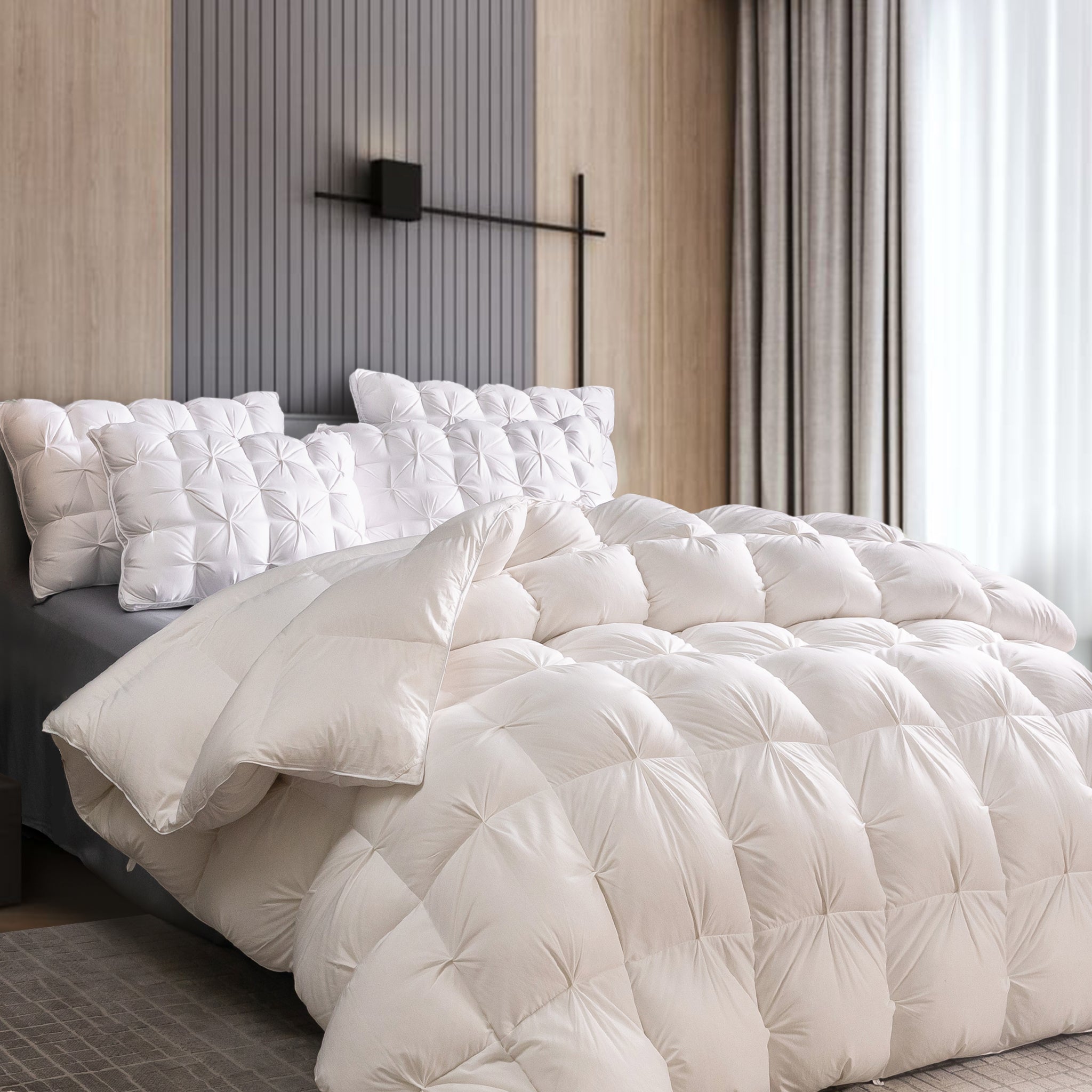


If you've ever shopped for new bedding and wondered whether you need a duvet, duvet insert, or comforter, you're not alone. These terms are often used interchangeably—even by bedding brands—but they usually describe slightly different ways of making and using your top layer of bedding.
The simplest distinction is this:
A duvet is usually a two-piece bedding system: an insert plus a removable duvet cover. A comforter is usually a finished, quilted bed covering designed to be used on its own.
But that distinction isn't absolute. Some comforters include attachment loops and can also be placed inside a duvet cover, which is why the labels can become confusing.
Here's how to compare them based on how you'll actually use your bed.
Duvet vs. Comforter at a Glance
| Feature | Duvet | Comforter |
|---|---|---|
| Basic Setup | Insert + removable cover | Usually one finished piece |
| Needs a Cover? | Usually yes | No, but one can sometimes be added |
| Appearance | Style comes mainly from the duvet cover | Outer shell is already part of the finished look |
| Cleaning | Cover can be removed and washed separately | The entire comforter usually needs to be cleaned |
| Style Changes | Easy—change the cover | Usually requires changing the comforter or adding a cover |
| Fill | Down, feathers, down alternative, wool or other fill | Can use many of the same fills |
| Warmth | Depends on the actual insert and cover | Depends on fill, weight, construction and other specifications |
| Upfront Setup | Usually requires buying an insert and cover | Can normally be used immediately |
Important: neither the word “duvet” nor “comforter” tells you the quality or warmth of the bedding by itself.
What Is a Duvet?
A duvet is generally a bedding system made from two separate pieces:
- Duvet insert — the filled inner layer that provides loft and warmth.
- Duvet cover — the removable outer fabric layer that surrounds the insert.
Think of the relationship between the two like a pillow and pillowcase.
The duvet insert may be filled with goose down, duck down, feathers, down alternative, wool, cotton or other insulating materials.
The removable cover supplies much of the visible color, texture and style while helping protect the insert from body oils, spills and everyday wear.
What Is a Duvet Insert?
A duvet insert is simply the filled inner component of a duvet system.
It usually looks like a white or neutral quilted comforter and is designed to fit inside a separate cover.
Many duvet inserts include loops or tabs around the corners or edges. These connect to ties inside a compatible duvet cover and help reduce shifting or bunching.
What Is a Duvet Cover?
A duvet cover is the removable fabric shell that goes around the insert.
It provides two practical benefits:
- Protection: it helps keep the insert cleaner.
- Style flexibility: you can change the color, fabric or look of the bed without replacing the filled insert.
Because the cover is much less bulky than the filled insert, it may also be easier to wash regularly, depending on the fabric and care instructions.
What Is a Comforter?
A comforter is a filled, quilted top layer that is generally designed to be used as a finished bedding piece without requiring a separate cover.
The shell, filling and stitching are all part of the finished comforter.
Comforters can be filled with many of the same materials found in duvet inserts, including:
- Goose down
- Duck down
- Feathers
- Down alternative fibers
- Wool
- Other natural or synthetic fills
This means “duvet vs. comforter” is mainly a question of design and intended use—not whether one contains down and the other doesn't.
What Is the Main Difference Between a Duvet and a Comforter?
The biggest practical difference is the removable cover system.
A traditional duvet insert is made with the expectation that a duvet cover will go over it.
A traditional comforter already has a finished outer shell and can be placed directly on the bed.
However, modern bedding does not always fit neatly into those labels. Some comforters are white or neutral, include attachment loops, and work perfectly well inside compatible duvet covers.
That overlap is why you may see essentially similar filled bedding described as a “down comforter,” “down duvet,” or “duvet insert” by different retailers.
Can You Put a Duvet Cover on a Comforter?
Yes, in many cases.
A comforter can be used inside a duvet cover if the dimensions are compatible and the two pieces can stay securely positioned.
Attachment loops make this easier because ties inside the duvet cover can connect to the comforter.
DownyHaven's current Premium Goose Down Comforter and Heavenly Soft Goose Down Comforter include eight duvet attachment loops.
So although we call these products “comforters,” shoppers can use them as finished comforters or pair them with a compatible duvet cover.
Duvet vs. Comforter: Which Is Easier to Clean?
The duvet system has one practical advantage: the removable cover can usually be cleaned separately from the filled insert.
This may reduce how often the insert itself needs full cleaning.
With a comforter used without a cover, the finished comforter itself is exposed directly to more body oils, dust, spills and everyday contact.
But this does not mean every duvet is machine washable or every comforter is difficult to clean.
The correct care method depends on the shell, filling, construction and manufacturer's instructions.
For goose down bedding in particular, always follow the care label rather than applying generic washing advice.
For more detail, see our Goose Down Comforter Washing Guide.
Duvet vs. Comforter: Which Is Warmer?
Neither is automatically warmer.
You may see broad claims that duvets are always thicker or warmer than comforters, but product names alone cannot determine sleeping temperature.
Warmth can depend on:
- Fill material
- Fill power
- Fill weight
- Construction
- Shell fabric
- Duvet-cover fabric
- Other bedding layers
- Bedroom temperature
- Your personal warmth preference
A lightweight duvet insert can be cooler than a heavily filled comforter, just as a premium down comforter can be warmer than some duvets.
If warmth is an important part of your purchase, use our Goose Down Comforter Buying Guide rather than relying on the words “duvet” or “comforter.”
Duvet vs. Comforter: Which Is Better for Hot Sleepers?
Again, the category name does not provide enough information.
A duvet adds another fabric layer when the cover is installed, but the overall result depends on the insert, cover fabric, fill amount, room temperature and other bedding.
A hot sleeper should compare the actual specifications instead of assuming every comforter is cooler or every duvet is warmer.
See our Bedding Guide for Hot Sleepers for a more complete explanation.
Duvet vs. Comforter: Which Is Easier to Style?
A duvet usually wins for frequent style changes.
You can keep the same insert and switch duvet covers to change:
- Color
- Pattern
- Texture
- Fabric
- Seasonal bedroom styling
A traditional comforter has its finished look built into the product.
That can be simpler if you already like the appearance and don't want to deal with inserting and securing a cover.
But if the comforter includes compatible attachment loops, adding a duvet cover later can give you many of the same styling options.
Duvet vs. Comforter: Which Is More Convenient?
A Comforter May Be Better If...
- You want a simple one-piece setup
- You don't want to put on or remove a duvet cover
- You like the comforter's existing outer design
- You want bedding that is ready to place directly on the bed
A Duvet System May Be Better If...
- You want to change your bedroom style frequently
- You want a removable protective layer around the insert
- You prefer washing the outer cover more frequently than the filled insert
- You already own several duvet covers
Does a Duvet Need a Top Sheet?
There is no universal rule.
Some sleepers use a duvet cover as the washable layer between themselves and the insert and choose not to use a flat top sheet.
Others prefer both a top sheet and a covered duvet.
This is mainly a matter of bedding preference, cleaning habits and the feel you want.
Does a Comforter Need a Duvet Cover?
No.
A comforter is generally designed so that it can be used on its own.
But “doesn't need one” is different from “can't use one.”
If the dimensions are compatible, a duvet cover can provide:
- Extra protection
- A different bedroom style
- A removable outer layer
Comforters with attachment loops are especially well suited to this setup.
Duvet Insert vs. Down Comforter: Is There Really a Difference?
With premium down bedding, the difference can become surprisingly small.
A white goose down comforter with a high-quality shell, quilted construction and attachment loops may perform almost exactly like what another retailer calls a “goose down duvet insert.”
That is why shoppers should compare the actual product rather than making a purchase based only on naming.
Important specifications include:
- Actual fill composition
- Down percentage
- Fill power
- Fill weight
- Construction
- Shell fabric
- Dimensions
- Attachment loops
- Care requirements
Our Goose Down Comforter Buying Guide explains each of those specifications in more detail.
DownyHaven Comforters: Comforter or Duvet Insert?
DownyHaven currently uses the term Goose Down Comforter for both of our filled down bed coverings.
That naming reflects the fact that both can be used as finished top layers without requiring a separate duvet cover.
At the same time, both include eight duvet attachment loops, so either can also be secured inside a compatible duvet cover.
| Feature | Premium Goose Down Comforter | Heavenly Soft Goose Down Comforter |
|---|---|---|
| Can Be Used Alone | Yes | Yes |
| Can Be Used With Duvet Cover | Yes | Yes |
| Attachment Loops | 8 | 8 |
| Fill Power | 850 | 850 |
| Fill | 95% White Goose Down | 95% White Goose Down |
| Main Design Difference | Dimensional baffle + sculpted twist | Classic sewn-through square box |
Choose Premium if you prefer the fuller, more dimensional baffle profile and signature sculpted design.
Choose Heavenly Soft if you prefer a cleaner, classic square-quilted profile at a more accessible price.
What Size Duvet or Comforter Should You Buy?
Whether the product is called a duvet insert or comforter, always check its actual dimensions.
Twin, Queen and King naming is useful, but different brands can use different finished dimensions.
You should consider:
- Your mattress width and length
- Mattress thickness
- How much side drape you want
- Whether two people share the bed
- The dimensions of an existing duvet cover
If you already own a duvet cover, the insert or comforter should be reasonably compatible with its dimensions so it doesn't bunch excessively or leave large empty areas.
See our Duvet & Comforter Size Chart before choosing a size.
Duvet vs. Comforter: Pros and Cons
Duvet Pros
- Removable cover
- Easy to change bedroom style
- Cover helps protect the insert
- Cover can usually be washed separately
Duvet Cons
- Requires an additional cover
- Putting the cover on can take extra effort
- Insert may shift if it isn't secured properly
- Buying both pieces can increase upfront cost
Comforter Pros
- Simple one-piece setup
- Ready to use without an extra cover
- No need to repeatedly insert bedding into a cover
- Some comforters can still be used with a duvet cover
Comforter Cons
- Changing the visible style is less convenient if used without a cover
- The whole comforter may need cleaning
- Large comforters can be bulky to wash and dry
Which Should You Choose: Duvet or Comforter?
Choose based on the system you want to live with, not which term sounds more premium.
Choose a duvet-style setup if changing covers, protecting the insert and having a removable outer layer matter most.
Choose a comforter-style setup if you prefer a simple, finished piece that can go directly onto your bed.
And if a high-quality comforter includes duvet attachment loops, you don't necessarily have to choose one system forever—you can use the comforter alone or add a compatible cover later.
Frequently Asked Questions
Is a duvet the same as a comforter?
Not exactly. A duvet generally refers to an insert designed to be paired with a removable duvet cover, while a comforter is generally designed as a finished top layer that can be used without an additional cover. However, retail terminology varies and the two products can be very similar.
Is a duvet insert the same as a comforter?
They can be extremely similar in construction and materials. The main difference is intended use: a duvet insert is designed specifically for use inside a cover, while a comforter is usually designed to work on its own. Some comforters can do both.
Can you use a comforter as a duvet insert?
Yes, if the comforter and duvet cover have compatible dimensions. Attachment loops or tabs make it easier to secure the comforter inside the cover.
Can you put a duvet cover over a goose down comforter?
Yes. A compatible duvet cover can help protect a goose down comforter and change the appearance of the bed. Check dimensions and attachment points before pairing them.
Which is warmer, a duvet or a comforter?
Neither is inherently warmer. Compare the actual fill material, fill power, fill weight, construction, shell and other bedding layers instead of relying on the product name.
Which is easier to wash, a duvet or a comforter?
A duvet system can make routine cleaning easier because the removable cover may be washed separately. The insert or comforter itself still needs to be cared for according to its specific label.
Do I need both a duvet and a comforter?
No. They generally perform the same basic role as the primary filled top layer of a bed. Choose the setup that better fits your cleaning, styling and comfort preferences.
Why are some brands calling the same product a duvet and others a comforter?
Bedding terminology varies between countries, retailers and manufacturers. Some brands use “duvet,” “duvet insert,” and “comforter” for very similar filled products. The specifications and intended use are more useful than the label alone.
Ready to Choose Your Bedding?
If you're deciding specifically between goose down options, start with our Goose Down Comforter Buying Guide to compare fill power, fill weight, construction, shell and warmth.
You can also compare all DownyHaven Goose Down Comforters or explore:
DownyHaven Blog Reader Offer
Use code BLOG10 for 10% off orders of $40 or more.
Limited to one use per customer.